Roofing · Guide
Why roofing companies lose storm jobs to the contractor who answers first
September 14, 2026
·
7 min read
·
Sol Reception
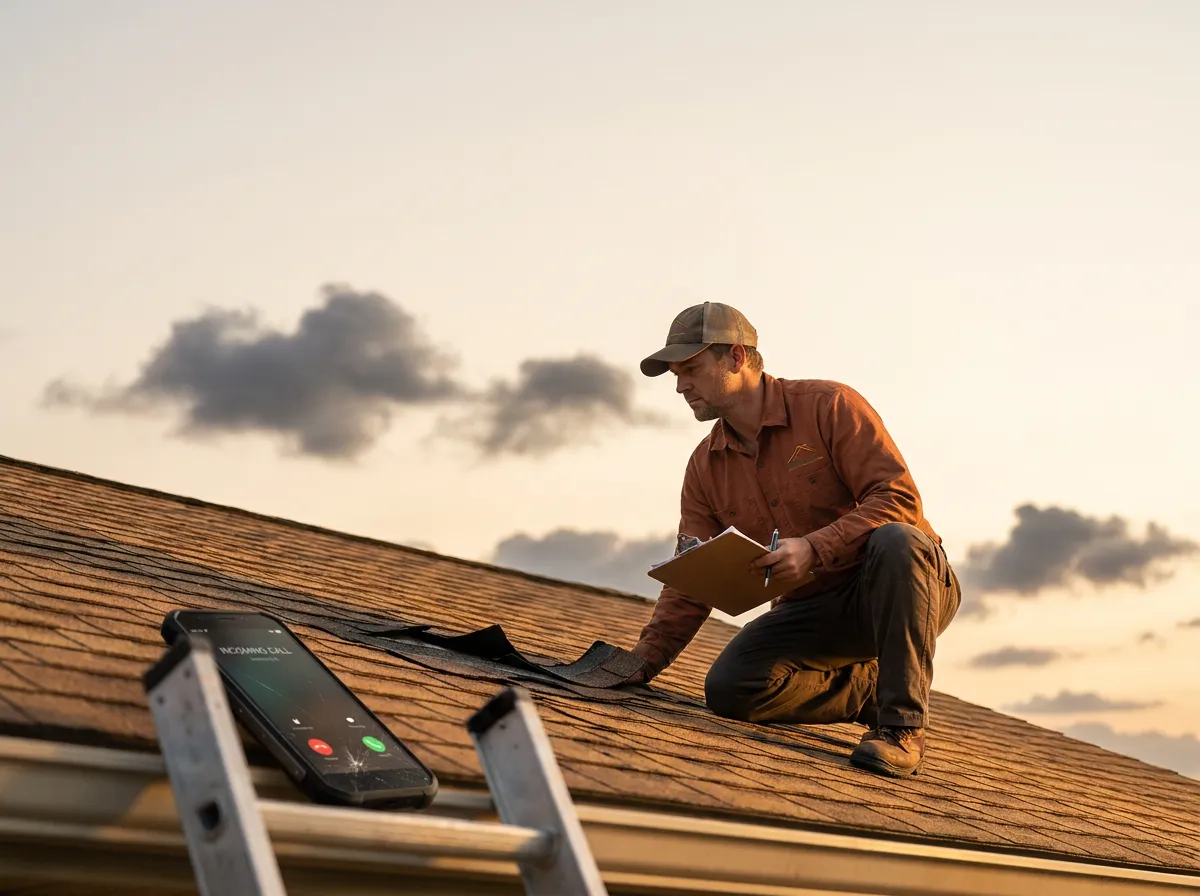
A hailstorm rolls through your service area on a Tuesday afternoon. By evening, dented gutters and cracked shingles are on every third house. For the next 48 hours your phone does not stop. Homeowners want an inspection, insurance adjusters want a quote, neighbors are comparing whose roof got hit worst. This is the best 48 hours your roofing company will see all year, and it is also the moment you are most likely to miss the calls that pay for your whole season.
Here is the direct answer for any roofer asking how to survive the surge without losing leads: you handle a storm-season call flood by putting an AI receptionist behind your phone, so every one of those calls gets answered on the first ring, gets qualified, and gets an inspection booked, no matter how many come in at once or how late they land. It answers all of them at the same time, in English and Spanish, day or night. It backs up your team when the crew is on a roof and the office line is jammed. It does not replace anyone. It just makes sure that during the hours your jobs are decided, not one caller rolls to voicemail.
Let me walk through why storm season breaks a roofer's phone, what the misses actually cost, and what a real fix looks like.
Why does a storm break a roofing company's phone?
Because the volume does not arrive evenly. On a normal week you might field 20 or 30 calls a day, and your office manager handles them fine. Industry estimates put the spike from a strong hailstorm through a mid-sized metro at 200% to 300% within hours. Suddenly you are looking at 80 to 120 calls in a single day, and every one of them is a homeowner who just watched their roof get pelted.
One person answering a ringing line cannot keep up with that. Calls stack. Callers wait, then hang up. Handwritten logs and quick-scribbled addresses fall apart at volume, and in most shops lost or wrong addresses claim a meaningful share of the leads you did manage to catch. Double-bookings climb. The system that felt fine at 25 calls a day quietly collapses at 100, and it collapses on the exact days when the jobs are biggest.
The after-hours problem sits right on top of it. Storms do not hit at 10 a.m. on a weekday. They hit at dinnertime and on weekends, and homeowners start dialing the second the sky clears. If your line rolls to voicemail after 5 p.m., you are closed during the highest-intent hours of the entire year.
What does a missed storm call actually cost a roofer?
More than most owners let themselves count. A roof replacement is a five-figure job. Miss a handful of storm calls in a single surge and the losses stack fast. Commonly cited industry estimates put the damage from missing multiple calls during a short storm window somewhere between $60,000 and $125,000 in lost revenue, because each one of those calls was a homeowner ready to sign.
And the caller will not wait for you. When someone has a damaged roof, they are not shopping for the best-reviewed roofer. They want the first competent one who picks up and gets an inspection on the calendar. Callers who hit voicemail typically hang up within about 20 seconds and dial the next roofer on Google. Contractors widely describe a 48-hour window after a storm in which most inspections get booked. Miss that window and the job is gone, not delayed. It belongs to the contractor who answered.
The cruelest part is that a missed call leaves no trace. There is no report that says “you lost a $14,000 replacement at 7:12 on Saturday.” The lead just quietly becomes someone else's customer, and you never know it happened.
How does an AI receptionist handle a storm call surge?
An AI receptionist answers your phone the moment your team cannot, and it does not have a limit. Where one office manager can hold one conversation, an AI receptionist can answer every call that comes in at the same time, so a 100-call day does not mean 75 voicemails. For a roofing company, a good one should:
- Answer every call 24/7, including the nights and weekends right after a storm when leads are hottest.
- Answer many calls at once, so a surge never turns into a busy signal or a full voicemail box.
- Qualify the lead the way your best office person would: is this storm or wind damage, is it a leak that is active right now, is it residential or commercial, is insurance involved, what is the property address.
- Book the inspection straight into your scheduling tool, whether that is Google Calendar, Jobber, JobNimbus, Housecall Pro, ServiceTitan, or AccuLynx.
- Capture the caller's name, number, address, and damage details cleanly, so you have a complete lead even when the next open inspection slot is a day out.
- Flag the urgent ones, an active leak or interior water coming in, and route them to you or your on-call crew right away instead of letting them sit until morning.
The goal is not a robot reading a script. The goal is that the homeowner who just watched hail hammer their roof gets a real answer and a booked inspection, so they never feel the need to call the next name on the list.
What about the calls that come in Spanish?
In a lot of US roofing markets, especially across the South and West, a real share of storm-damage calls come from Spanish-speaking homeowners. The Census Bureau's American Community Survey counted more than 41 million people speaking Spanish at home. If your phone can only serve those callers when one specific bilingual person happens to be at the desk, then during a surge those leads are getting screened out whether you meant to or not. They hang up and call a company that can help them in their language.
Staffing bilingual coverage around the clock through a storm is close to impossible. Sol answers in both English and Spanish on the same line, at any hour, at any volume. A Spanish-speaking homeowner gets a warm, clear conversation and a booked inspection instead of a language wall. In many markets that is a large pool of jobs your competitors are still leaving on the table.
A quick ROI example
Say your average roofing job is worth $9,000, and a single storm brings a surge where you miss 12 callable inspections because the line was jammed and after-hours calls rolled to voicemail. Even if only a third of those would have closed, that is four lost roofs, or about $36,000 in revenue from one storm you never billed. Over a season with several storm events, the misses run well into six figures.
Now flip it. An AI receptionist that answers every one of those calls and books even half the inspections you were missing pays for itself many times over on a single storm, because it costs a small fraction of one hire and never sleeps through a weekend surge. You do not need to catch every call for the math to land. You just need to stop sending your best storm leads to voicemail during the 48 hours that decide your year.
Common objections, answered
“My customers want to talk to a real person.” During a storm, what they want most is a fast answer and an inspection on the calendar. Sol picks up on the first ring, qualifies the damage, books the inspection, and hands off to your team the moment a human is needed. That beats a voicemail box every time.
“I already have an answering service.” Most answering services just take a message and charge you per call to do it. They do not qualify storm damage, they do not book the inspection, and they do not scale when 100 calls hit in a day. Sol completes the booking, captures the address and damage details, and routes the active-leak emergencies, so the call becomes a job instead of a note you chase down later.
“I do not want to replace my office manager.” You are not. Sol backs up the person you have. Your office manager cannot answer 12 lines at once at 8 p.m. on a Saturday, and no one should expect them to. Sol catches the overflow and the after-hours flood so your team can work the leads that are already booked instead of drowning in a ringing phone.
The bottom line
Storm season is won and lost on the phone in the 48 hours after the sky clears. Every unanswered ring in that window is a roof going to the contractor who picked up. An AI receptionist like Sol answers all of them, in English and Spanish, at any volume and any hour, qualifies the damage, books the inspection, and routes the emergencies, so the surge that used to overwhelm your office becomes the most profitable stretch of your year.