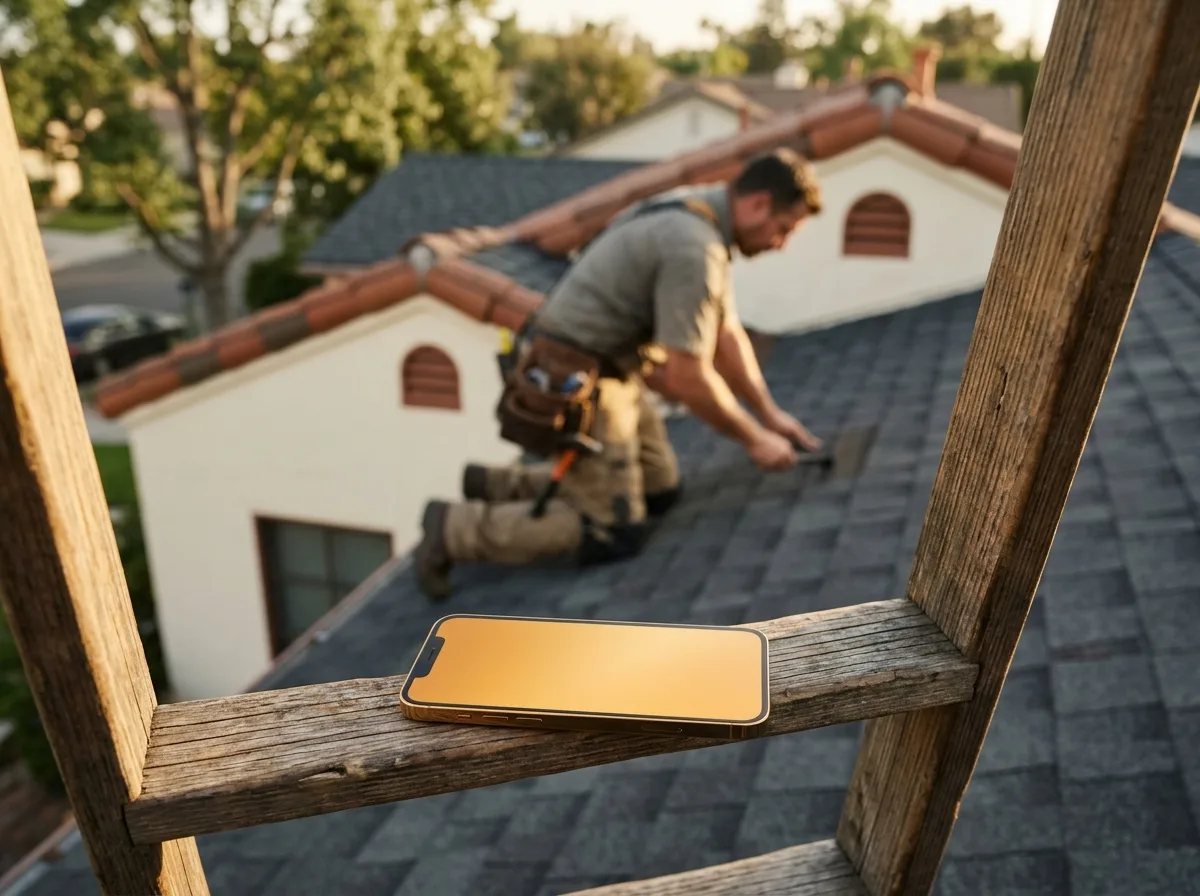
A homeowner finds a leak after a storm. They pull up their phone and call three roofing companies inside the same ten minutes. Whoever picks up first gets the inspection scheduled. The other two never hear from that homeowner again, even if their price would have been better.
That is the whole game in residential roofing right now. Homeowners are not loyal to a roofing brand they have never used. They are loyal to whoever answers.
Short answer: Roofing companies lose jobs to competitors mainly because calls go unanswered while crews are on a roof, trucks are between job sites, or the office is closed nights and weekends. The contractor who calls back first typically wins the estimate, and a callback delay of just 30 minutes cuts conversion sharply. A bilingual AI receptionist like Sol answers every roofing call on the first ring, in English and Spanish, and books the estimate directly onto the calendar so the job never goes to whoever happened to pick up faster.
How many roofing leads are actually lost to missed calls?
More than most roofing owners want to admit. Industry estimates put missed or voicemail-routed calls at 20 to 30 percent of total inbound volume for a typical roofing company, and roughly 85 percent of homeowners who do not reach someone on the first try will not call back. They simply call the next name on their list.
That is not a minor leak in the pipeline. If a fifth to a third of every call a roofing company gets never turns into a conversation, that is a fifth to a third of the marketing spend, the storm chasing, the door knocking, and the reviews that made the phone ring in the first place, wasted on a line nobody picked up.
Why does the first roofer to answer usually win the job?
Because a roof is not a considered purchase the way a kitchen remodel is. It is urgent, it is stressful, and most homeowners assume one roofer is about as good as the next until proven otherwise. Speed becomes the tiebreaker.
The data backs this up. The first 60 seconds after a homeowner calls are the highest-intent window there is. Per the MIT and InsideSales.com Lead Response Management study, contractors who respond within 5 minutes are orders of magnitude more likely to connect and qualify than those who wait 30 minutes. In competitive metro markets, where 20 to 40 roofing companies can be competing for the same search results, commonly cited trade figures put the share of jobs won by the first contractor to respond at 70 to 80 percent, not because their bid was lowest, but because they showed up first.
Roofing companies do not lose bids on price nearly as often as they lose them on silence.
What does a missed roofing call actually cost?
Run the numbers on a mid-size roofing company and the picture gets uncomfortable fast.
Say the average job, blending small repairs with full replacements, is worth about $9,000. A call that gets answered live and scheduled quickly converts to a booked estimate, and then a signed job, at roughly 30 percent. That puts the expected value of one answered call at about $2,700.
Now say that same company misses 6 calls a week between crews being on roofs, trucks in transit, and calls landing after 5pm or on a Saturday. That is 312 missed calls a year. Even being conservative and assuming only half of those were real, qualified homeowners rather than spam or solicitors, that is 156 missed opportunities. At a 30 percent close rate, that is roughly 47 jobs the company never even got the chance to bid on.
Forty-seven jobs at $9,000 each is about $423,000 in lost revenue a year, from a company that was already spending money to make that phone ring in the first place.
How does an AI receptionist help roofing companies stop losing estimates?
This is exactly the gap Sol is built to close. Sol answers every call to a roofing company on the first ring, 24 hours a day, in English or Spanish, whether the crew is on a roof, the office is closed, or three trucks are already out on jobs. It asks the right intake questions (address, type of damage, whether insurance is involved, timeline) and books the estimate directly onto the calendar the office already uses.
Sol backs up the team. It does not replace the office manager who handles supplier calls and change orders, and it does not replace the crew on the roof. It makes sure that while everyone is doing the job they were hired to do, the phone never gets the chance to cost the company an estimate.
Can an AI receptionist actually book a roofing estimate, or just take a message?
A good one books, it does not just take messages. Sol checks real-time availability, offers the homeowner actual open slots, confirms the appointment by text, and adds it straight to the roofing company's scheduling calendar. If the homeowner needs to reschedule later, Sol handles that too, without anyone at the office needing to play phone tag.
A message on a sticky note or buried in a group text is where roofing leads go to die. A booked estimate on the calendar is a job in the pipeline.
What if a homeowner wants to talk to a real person?
Some do, and that is fine. Sol is built to recognize when a call needs a human, a complex insurance claim dispute, an angry customer following up on an existing job, a large commercial bid, and hand it straight to the right person instead of trying to force everything through automation. The goal is not to keep every caller away from the team. It is to make sure the routine calls, the ones that just need an estimate booked, never sit in a queue waiting for someone to be free.
For a typical residential estimate request, most homeowners never care whether they spoke with an AI receptionist. They care that someone answered on the first ring, asked good questions, and got them on the calendar for Thursday.
What happens to roofing calls after hours, nights, and weekends?
They get answered, which is the whole point. A large share of roofing calls, especially after a storm, come in outside normal business hours. Someone gets home from work, walks the yard, notices shingles in the gutter, and calls that evening. If that call hits a generic voicemail, the homeowner is already dialing the next roofer before the message finishes recording.
Sol handles nights, weekends, and the call surges that come with a storm system moving through, without needing anyone to be standing by the phone. Every call gets a live conversation and, where it makes sense, a booked estimate slot, even at 9pm on a Sunday.
Does Sol replace my roofing office staff or field crew?
No, and it is not supposed to. The people who negotiate with suppliers, manage crews, and handle the homeowner relationship after the estimate are not replaceable by software, and Sol was not built to try. What Sol replaces is the moment a real opportunity turns into a missed call, because nobody happened to be free to pick up.
Sol backs up the team so the team can focus on roofs, not ringing phones.
How fast can a roofing company get Sol answering calls?
Setup typically takes days, not months. Sol connects to the phone number the roofing company already advertises, syncs with the scheduling calendar already in use, and starts taking calls without homeowners needing to learn a new number or a new process. There is no app for the customer to download and nothing for the office to change about how they already work, other than watching estimates land on the calendar that used to go to voicemail.
Stop losing jobs to a phone nobody could answer
Every missed call is a homeowner who found another name in ten seconds. Sol makes sure that never happens on your line again, in English or Spanish, day or night.