
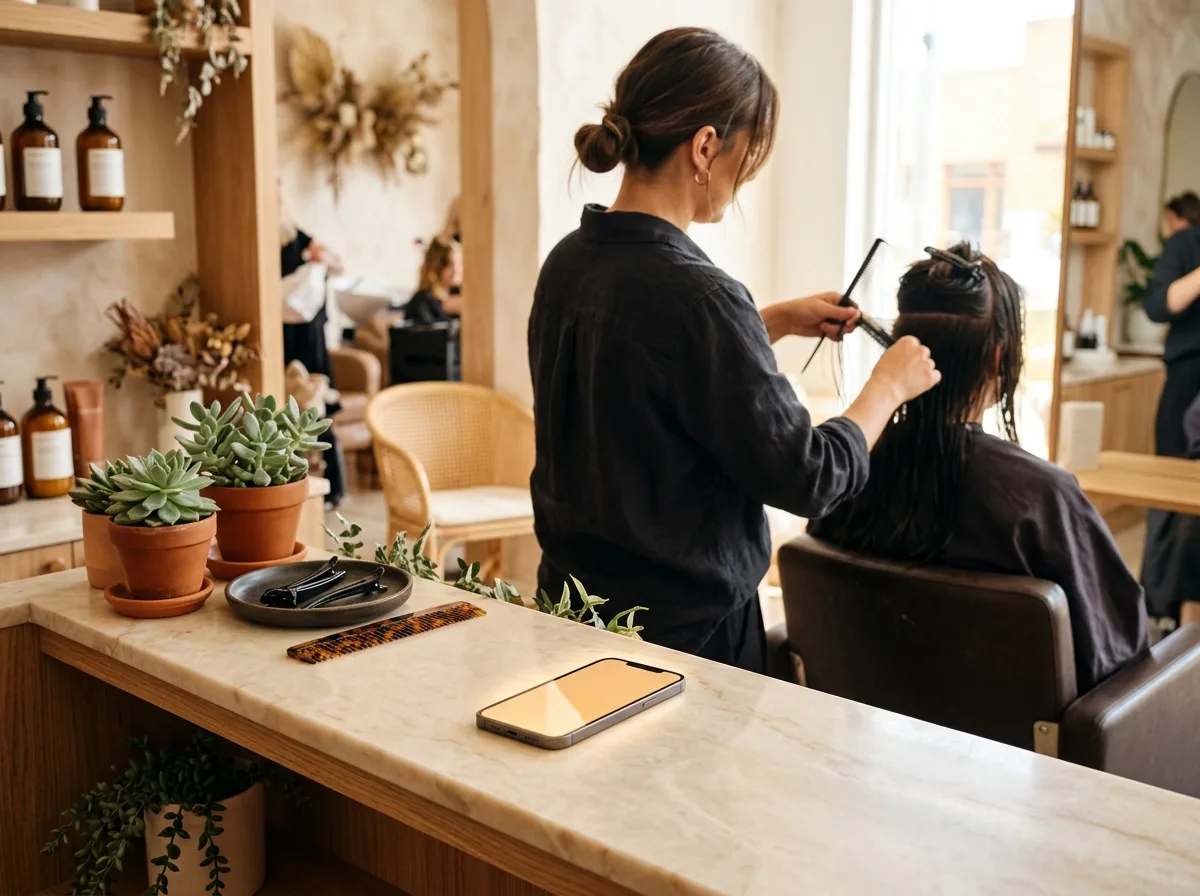
Every stylist has a client in the chair. Foils are in, a blowout is half done, someone's mid-shampoo. The phone rings at the front desk and nobody can get to it.
That caller wanted to book a cut and color. They don't leave a voicemail. They open their phone, find the next salon nearby, and book there instead.
When a salon loses a client, it isn't always the work. Sometimes it's the phone. Here are 7 common phone problems, what each one costs, and how to fix it.
Short answer: The phone problems that cost beauty salons the most bookings are calls ringing out while stylists are with clients, voicemail as the after-hours plan, booking that only happens when someone's at the desk, no Spanish-language option, callers left on hold during checkout, calls that needed a person and never got one, and a voicemail pile waiting every morning. A bilingual AI receptionist like Sol fixes them by answering every call on the first ring, any hour, in English or Spanish, booking the appointment into your calendar, and texting the salon when a call needs a person.
The phone rings while every stylist has a client
This is the busiest problem in any salon, and it's built into the work. Your best hours for booking calls are the same hours your team is busiest. Nobody can put down the color brush to answer.
The caller doesn't know that. All they hear is a phone ringing out. To them it feels like nobody's there.
The fix: Treat the phone as its own job. Add a layer that answers when your team can't, so the next client books instead of hanging up. Sol answers while your stylists stay with the client in the chair.
Voicemail is your after-hours plan
Plenty of clients decide to book at night. Someone looks in the mirror after work, decides it's time, and calls. Your salon closed hours ago, so they get a recording.
Some will leave a message. Many won't. The ones who do are waiting on a callback that comes the next day, after another salon with online or live booking already took them.
The fix: Answer after hours instead of recording. Sol picks up any time, day or night, and books the appointment into your calendar while the client is still in the mood to book it.

Booking only happens when someone's at the desk
If the only way to get on the schedule is a person at the front desk with the calendar open, your booking hours are your desk hours. That leaves out lunch breaks, early mornings, late evenings, and the days you're closed.
It also means double work. Someone writes a name on a sticky note and types it into the calendar later, if they remember.
The fix: Connect the phone to the calendar. Sol books the appointment straight into your calendar on the call, so the booking is real before the caller hangs up and nothing waits on a sticky note.
Nobody answers in Spanish
In many neighborhoods, some of your best potential clients are more comfortable booking in Spanish. A caller who hears an English-only greeting, or who struggles to explain the service they want, often just hangs up.
You never see that loss. It doesn't show up as a missed call you remember. It just looks like a slower week.
The fix: Answer in both languages from the first word. Sol answers in English or Spanish, so the client books in the language they're comfortable in. Every call answered. English and español.
Callers sit on hold while you check someone out
Your front desk is ringing up a client, rebooking her next appointment and talking product. The phone rings. Now someone is on hold, or the person at the counter is waiting while you answer.
Either way, somebody gets a worse experience. The caller on hold may hang up. The client at the counter feels rushed.
The fix: Give the phone its own answer. When Sol takes the call, your front desk can finish with the client in front of them, and the caller still gets booked.
Calls that need a person never reach one
Not every call is a simple booking. A client is unhappy with last week's color. A bride wants to talk through a wedding party. A regular needs to move an appointment with her usual stylist and has questions.
These are the calls that most need a human, and on a busy day they're the easiest to lose track of.
The fix: Make sure those calls reach someone fast. When a call needs a person, Sol texts the salon so the right person on your team can call back, instead of the message getting buried.
Every morning starts with a voicemail pile
The salon opens and the first job is playing back messages, writing down names, and calling people back. Some don't pick up. Some already booked elsewhere.
That's time your front desk could spend on the clients walking in the door.
The fix: Let the night's calls arrive already handled. With Sol answering and booking after hours, the morning starts with appointments on the calendar instead of a list of callbacks.
What should a salon fix first?
Call your own salon after closing. Then call it on your busiest afternoon. Listen to what a new client hears both times.
If either call ends in a ring-out or a recording, you've found where bookings leak. Fix that gap first. For many salons it's the busy hours and the after hours, because that's when clients are ready to book and nobody's free to answer.
Where does Sol fit in?
Sol is an AI receptionist that backs up your team. It answers every call on the first ring, any hour, in English or Spanish, books the appointment into your calendar, and texts the salon when a call needs a person. It doesn't replace your front desk or your stylists. It covers the moments when they can't get to the phone.
The result is simple: more chairs filled by the people who were already trying to book with you.
Hear Sol answer a call yourself on the demo line: 619-737-1853. Or explore all of our live industry demo lines.