The short answer: put a bilingual voice on the line that picks up in seconds and handles the whole call in whichever language the caller starts in. That means greeting in both languages, capturing the address or listing they are asking about, qualifying whether they are buying, selling, or renting, and booking the showing or the consult before the call ends. If nobody on your team speaks Spanish, an AI receptionist that answers in English and Spanish covers those calls around the clock and hands your agents a lead they can actually work.
What most brokerages do instead is let the call go to voicemail, or answer it, realize there is a language gap, and promise a callback that never converts. The caller hangs up and dials the next sign they saw.
That is an expensive habit right now, and here is why.
Why Spanish-speaking callers matter more than most brokerages realize
Hispanic Americans are projected to account for 70% of all new homeowners by 2040, according to NAHREP projections. The Hispanic homeownership rate stands at 48.5%, or 10.2 million households, and the number of Hispanic homeowners hit a record high in 2025 on a net gain of 441,000.
Meanwhile, culturally competent Spanish-speaking agents are commonly estimated at about 7% of the market, and on the mortgage side closer to 4%. In one survey of more than 1,000 Hispanic borrowers, 23% said language was a barrier, and 34% of those needed a family member to translate to get through the mortgage process.
Read those two numbers next to each other. Demand is surging. Supply of people who can answer the phone in Spanish is not. If you are the brokerage that picks up in Spanish, you are competing against a very small field for a very large and growing pool of buyers and sellers.
What actually happens when a Spanish-speaking buyer calls your office
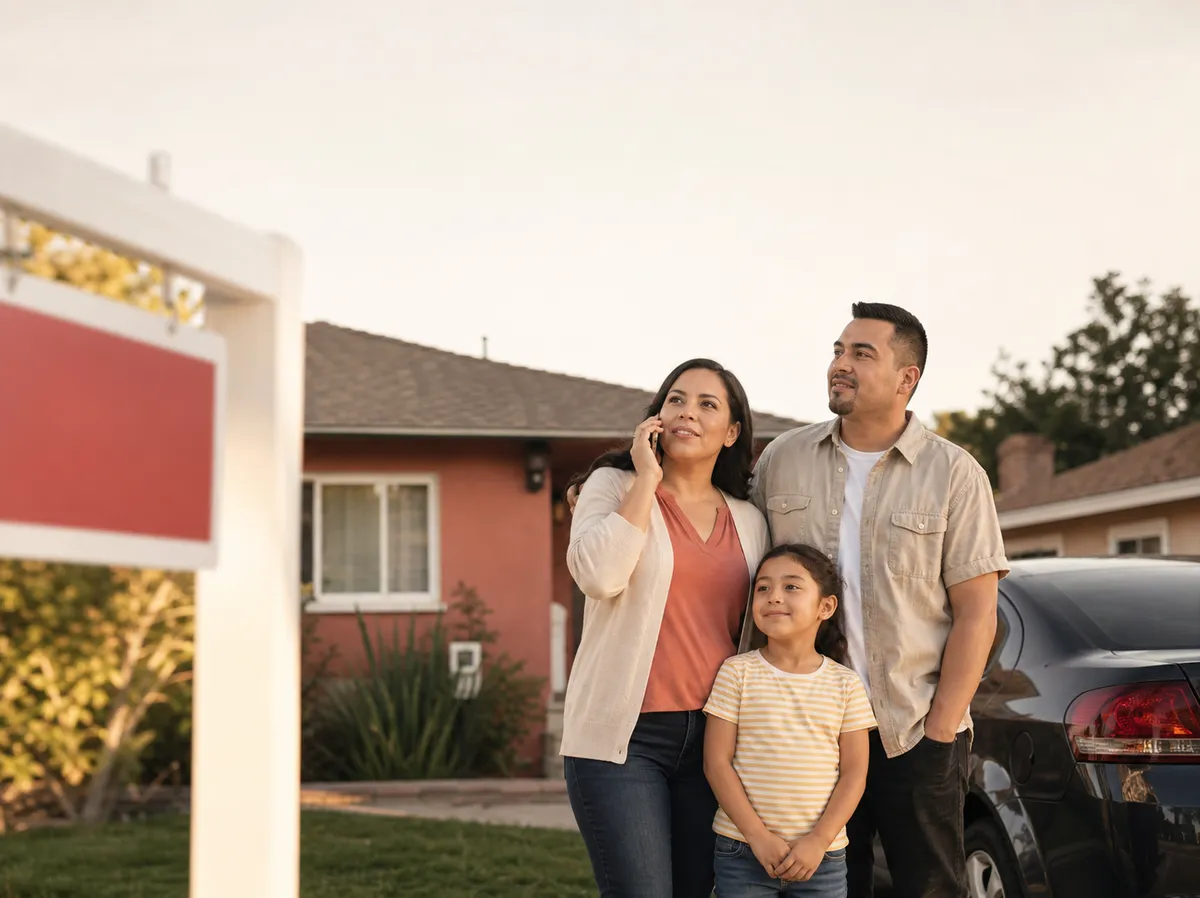
Picture a Saturday afternoon. A family drives past one of your listings, sees the sign, and calls the number. Your agent is mid-showing across town. The call rolls to voicemail in English. Nobody leaves a message, because leaving a voicemail in a second language when you are not sure anyone will call back is uncomfortable, so they hang up and call the next number.
Or your front desk answers, hears Spanish, and says “one moment” while looking for someone who can help. There is no one. The call ends with a name, a phone number, and no idea which property they were asking about.
Either way, the lead is gone. And it was a good one. Sign calls are among the highest intent leads a brokerage gets, because the caller is physically standing in front of the house.
How fast do you actually have to answer?
Faster than most teams think. Responding within five minutes rather than thirty makes an agent roughly 100 times more likely to make contact and 21 times more likely to qualify the lead, per Dr. James Oldroyd's study with InsideSales.com. A commonly cited industry figure puts roughly 78% of buyers with the first agent who responds.
Now the uncomfortable number: WAV Group's agent responsiveness study clocked the average response to a buyer inquiry at 917 minutes, over 15 hours, with 48% of inquiries never answered at all. After about an hour, that lead is already talking to somebody else.
Layer a language gap on top of a 15 hour response time and you are not really competing for that buyer at all. Speed and language are the same problem. A call that gets answered in the caller's language in the first ten seconds converts. A call that gets answered late, in the wrong language, does not.
What should an AI receptionist do on a Spanish-language real estate call?
Answering in Spanish is the floor, not the finish line. A bilingual receptionist for a real estate team should do all of this on the call:
Detect the language and stay in it. The greeting goes out in both languages. Whichever one the caller answers in, the whole conversation continues in that language, including the confirmation at the end.
Capture the property. Which listing, which address, which MLS number. A sign call without a property attached is close to worthless to the agent who picks it up.
Sort buyer from seller from renter. These go to different people on most teams. A seller calling about a valuation should never land in the buyer follow-up queue.
Ask the qualifying questions your team would ask. Timeline, whether they are working with another agent, whether they are pre-approved and with whom, price range, area, and whether they need a Spanish-speaking agent for the rest of the relationship. That last one matters, because it tells you where to route the lead.
Book the appointment. A showing, a buyer consult, or a listing appointment, put straight on the right agent's calendar with the confirmation read back in Spanish.
Route the urgent ones. An offer deadline question or a call from a client already under contract should trigger an immediate text to the agent, not sit in a queue.
Write the lead into your CRM in English. Your agents read the notes in English even when the call happened in Spanish. Good bilingual coverage handles the translation so nobody on your team has to.
Do I need to hire a bilingual agent instead?
If you can find and afford one, hire them. A bilingual agent is a genuine asset, and Sol is not a replacement for that person.
But there are two problems with treating hiring as the whole answer. First, the talent is scarce, which is exactly why the commonly cited figure for Spanish-speaking agents sits around 7%. Second, one bilingual agent cannot answer the phone at 8 PM on a Sunday, during their own showings, or while they are at the closing table. The calls you are losing are mostly the ones nobody was free to take.
The practical setup for most teams is both. Your bilingual agent runs the relationship. The AI receptionist makes sure that when the phone rings and that agent is busy, the caller still gets a real conversation in their language and a booked appointment instead of a voicemail beep. Sol backs up your team. It does not stand in for it.
What does one missed Spanish-language call actually cost?
Run your own numbers, but here is the shape of it.
Say your average commission per closed side is $9,000. Say your team converts sign and inbound calls to closings at 3%. That is an assumption, not a benchmark, so swap in your own number: published conversion rates for online real estate leads run well below it, while live inbound phone calls from people standing in front of a house convert far better than web forms. At 3%, each answered inbound call is worth roughly $270 in expected commission before you subtract anything.
Now say you are missing six Spanish-language calls a month, which is conservative in a market with any meaningful Hispanic population. On those assumptions that is about $1,600 a month in expected commission walking to the brokerage down the street, or close to $19,000 a year. One extra closed side pays for bilingual phone coverage many times over.
The arithmetic gets worse when you remember those calls are not evenly distributed. Sign calls and referral calls from Spanish-speaking families cluster, because those families refer each other. Losing the first one often means losing the next three.
What about callers who switch between English and Spanish?
Most bilingual households do this constantly, and a receptionist that cannot follow the switch is worse than one that just picks a language. A caller may open in English, get to the part about financing, and switch to Spanish because that is where they are more comfortable with the details. Sol follows the switch mid-conversation rather than forcing the caller to restart.
This is also where “press 2 for Spanish” falls down. Menu trees make the caller commit to a language before they know what they need help with, and they add friction at the exact moment you are trying to remove it.
How Sol handles it for real estate teams
Sol is a bilingual AI receptionist built for appointment- and lead-driven businesses. For a real estate team, that means:
- Answers every call in English or Spanish, in seconds, 24/7, including nights and weekends when sign calls actually happen
- Captures the property, the intent, the timeline, and the financing status
- Books showings, buyer consults, and listing appointments directly on your agents' calendars
- Routes urgent calls to the right agent immediately by text
- Writes clean lead notes into your CRM in English, no matter which language the call happened in
- Takes several calls at once, so an open house weekend does not produce a queue
Your agents keep doing what they do. Sol makes sure the phone stops being the place your leads leak out.