Real Estate · Guide
What happens to your leads when you miss a call during a showing (and how to stop losing them)
July 14, 2026
·
7 min read
·
Sol Reception
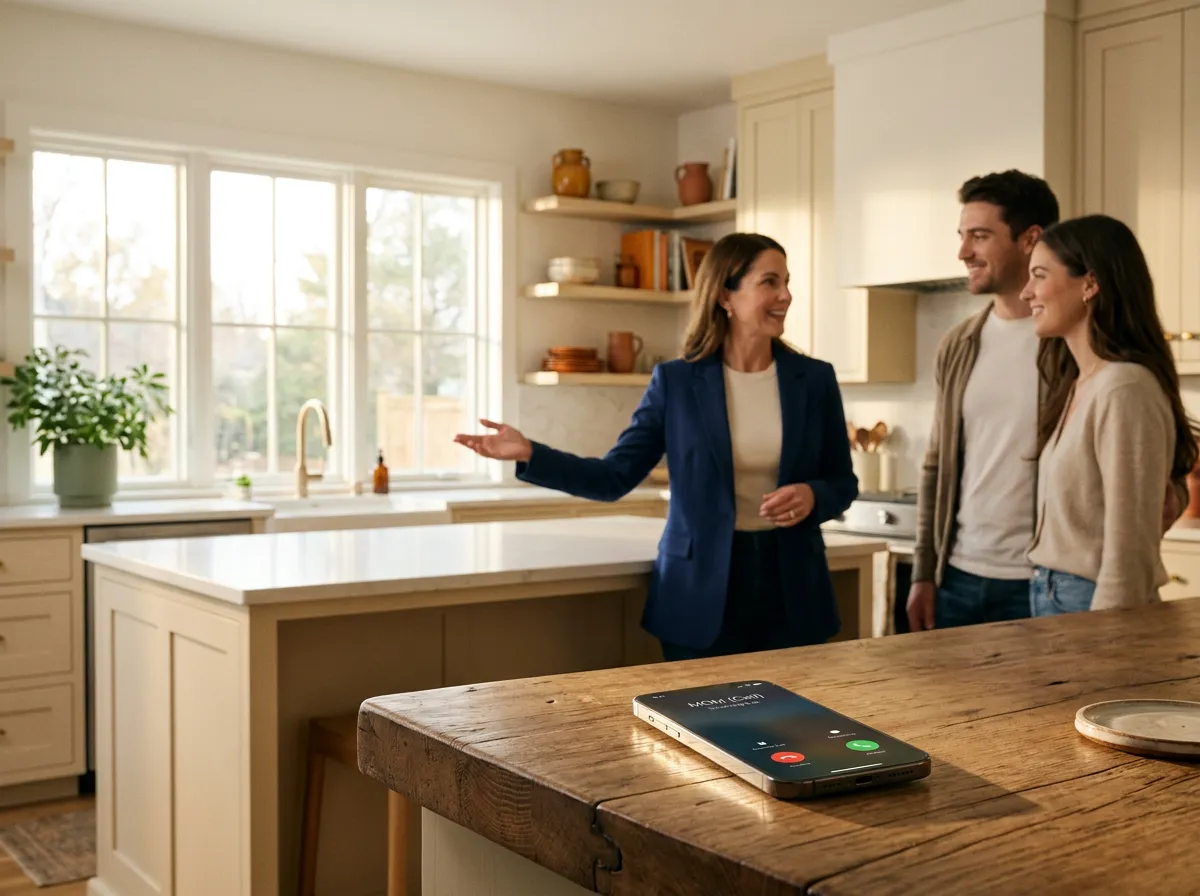
The lead calls the next agent. That is the whole answer, and it happens in about the time it takes you to walk a buyer through a kitchen.
Real estate is one of the few businesses where the winner is decided before the pitch. A buyer clicks a listing at 7:40 pm, calls three agents in a row, and books a showing with whoever picks up. A seller who just decided to list calls two names off a sign and gives the listing appointment to the one who answers. Research on lead response is blunt about this: agents who respond within five minutes are dramatically more likely to convert, and the odds fall off a cliff after the first few minutes. The top agents respond in minutes. The industry average is measured in days.
The cruel part is that the calls come exactly when you cannot take them. You are inside a showing. You are running an open house. You are at the closing table. You are driving between appointments with a client in the passenger seat. Every one of those moments is you doing your job well, and every one of them is a moment when a new lead hits your voicemail and moves on.
This is what Sol was built for. Sol is an AI receptionist that answers every call, in English or Spanish, qualifies the caller, books the appointment on your calendar, and hands you a lead you can actually work. It backs you up when you cannot pick up. It does not replace you, and it never pretends to be you.
Why does the first agent to answer usually win the deal?
Because a person calling about a house is in a buying moment, and that moment is short.
When someone calls about a listing, they are not shopping for an agent. They are trying to see a house. They want a time, an address, and the confidence that a human being is going to show up. The first agent who gives them that becomes the agent. Nothing about the second agent's marketing, brokerage, or years of experience changes that, because the second agent is calling back into a decision that has already been made.
That is why “call back within the hour” is not a standard anymore. An hour is enough time for your lead to book a showing, tour a house, and start thinking about an offer with someone else.
What does a missed call actually cost a real estate agent?
Run the math on your own numbers and it stops being abstract.
Say your average commission on a closed side is $9,000 and you convert one in ten new inbound leads into a closing. That makes one inbound lead worth roughly $900 in expected value before you have said a word to them. Now count the calls you send to voicemail in a normal week. Three? Five? At five missed calls a week, you are letting go of roughly $4,500 in expected value every week, and about $18,000 a month.
Then add the part that stings more: you paid for those calls. Portal ads, Facebook campaigns, sign calls off a listing you spent money to market. The marketing budget did its job. It got the phone to ring. The phone ringing into voicemail is where the money evaporates.
And voicemail is not the safety net people think it is. Most callers who reach voicemail do not leave a message. They hang up and dial the next agent, and you never learn that the call happened at all. Your missed-call problem is invisible by design.
How can an agent answer calls while showing a property?
You cannot, and you should not try. The fix is not answering more calls yourself, it is making sure no call goes unanswered while you are working.
That is the practical role of an AI receptionist. When your phone rings and you cannot pick up, the call forwards to Sol. Sol answers on the first ring, and the caller gets a real conversation instead of a beep:
- Which property are you calling about? Sol captures the listing address so you know exactly why they called.
- Are you working with an agent already? Basic qualification, so you know what you are walking into.
- Would you like to see it? Sol offers real times from your calendar and books the showing directly.
- Buying, selling, or both? Seller leads get routed differently from buyer leads, because a listing appointment is worth chasing tonight.
Then Sol texts you the summary before you have finished walking the current client to their car. Name, number, property, intent, and whatever is already on your calendar. You come out of a showing with a booked appointment instead of a missed call notification.
What should a good AI receptionist do for a real estate business?
Not every AI phone answering setup is worth putting in front of a lead. A good one should:
- Answer 24/7, including nights and weekends. Listing traffic peaks in the evening, and so do the calls. A receptionist that only works 9 to 5 misses the exact window where buyers are browsing.
- Book onto your real calendar. If the outcome is “we will have someone get back to you,” you have built a nicer voicemail. Sol books directly into the calendar you already use.
- Handle Spanish and English on the same line. In a huge share of US markets, a meaningful slice of buyers and sellers prefer Spanish. If your phone can only serve one language, you are quietly filtering out a chunk of your market. Sol switches based on how the caller speaks, without a menu tree.
- Know your listings. Address, price, beds, baths, open house times. A caller asking a basic question about a property should get an answer, not a callback promise.
- Escalate when it matters. A seller ready to list tonight should be routed to you live, not scheduled for tomorrow. Sol can pass the hot ones straight through.
- Give you a clean handoff. A written summary, a transcript, and the lead in your CRM. You should never have to reconstruct what happened.
Will an AI receptionist make my leads feel like they got a robot?
This is the objection worth taking seriously, because a bad experience on the phone is worse than a missed call.
The honest framing: a lead who reaches voicemail already knows they got a machine, and they know they got the machine that means nobody is coming. The comparison is not “AI receptionist versus you personally picking up on the first ring.” That version of you does not exist while you are mid showing. The comparison is “AI receptionist versus voicemail,” and voicemail loses that one every time.
Sol is warm, clear, and upfront about being an assistant. It answers the question, books the time, and tells the caller you will follow up. Callers do not need you to have picked up. They need to feel handled. Ninety seconds of a real conversation and a confirmed appointment beats a beep and a promise you may not get to for six hours.
Does an AI receptionist replace my assistant or my team?
No. Sol backs up your team, it does not replace it.
Most solo agents do not have a full-time assistant to replace. What they have is a phone that rings while they are working and a voicemail box collecting leads they will never see. For teams with a transaction coordinator or an inside sales agent, Sol takes the overflow: the calls that come in after hours, the ones that hit during a busy Saturday, the third caller when your two humans are already on the line. Your people keep doing the work that needs a person. Sol makes sure nobody hits a dead line while they are doing it.
What this looks like in a week
Take a mid-volume agent in a Sunbelt market. About 40 inbound calls a week between sign calls, portal leads, and referrals. In a typical week, roughly a third go unanswered because the agent is in front of a client. That is about 13 calls. Of those, maybe two are real, ready buyers or sellers.
With Sol on the line, those 13 calls get answered. Most are quick questions, some are wrong numbers, and two turn into booked showings and one seller conversation the agent would otherwise never have known about. Nothing about the agent's day changes. The showings still happen. The clients still get full attention. The difference is that the phone stopped being a leak.
That is the whole promise. Not more hours. Not more hustle. Just no more leads walking out the door while you are busy earning the last one.