
A homeowner with water coming through the ceiling is not going to leave you a polite voicemail. They are going to call the next plumber. If that one answers, the job is gone.
Most plumbing companies do not lose emergency jobs because of price or skill. They lose them because of how the phone is set up. A forwarding rule that rings out, a voicemail greeting that sounds closed, a number that only one person can answer. Small setup choices, big lost jobs.
Here are 7 common mistakes, what each one costs, and how to fix it.
Short answer: The most common phone mistakes that cost plumbing companies emergency jobs are forwarding calls to a single cell phone, letting voicemail be the after-hours plan, not answering while on a job, having no Spanish-language option, sending callers through a phone menu, never texting back missed calls, and leaving the schedule disconnected from the phone. Each one gives a competitor the job. A bilingual AI receptionist like Sol backs up your team by answering every call on the first ring, capturing the details, and booking or dispatching right away.
You forward every call to one person's cell phone
It feels like coverage. The owner or the on-call tech gets every call on their cell. The problem is that one phone can only be in one place. If the tech is under a sink, driving, or asleep, the call rings out.
Picture a Saturday morning. The on-call tech is elbow deep in a water heater swap. A call comes in from a homeowner with a leaking supply line. It rings six times and goes to voicemail. The homeowner has already tapped the next number. One forwarded phone just cost you an emergency job worth several hundred dollars, and maybe a repeat customer.
The fix: Never let one person's pocket be your whole phone plan. Add a backup layer that answers when the first person cannot, and sends the details to whoever is on call.
You rely on voicemail as your after-hours plan
Voicemail is a place calls go to be forgotten. At 10 PM, a homeowner with a backed-up main line wants a person or at least a booked time. A beep and a recording tells them nobody is coming.
Many will not leave a message. The ones who do wait for a callback that may arrive after another plumber already rolled a truck.
The fix: Replace voicemail with something that actually answers. Sol picks up at any hour, asks what is happening, collects the address and callback number, flags true emergencies to your on-call tech, and books non-urgent jobs into the next open slot.
You let calls ring out while you are on a job
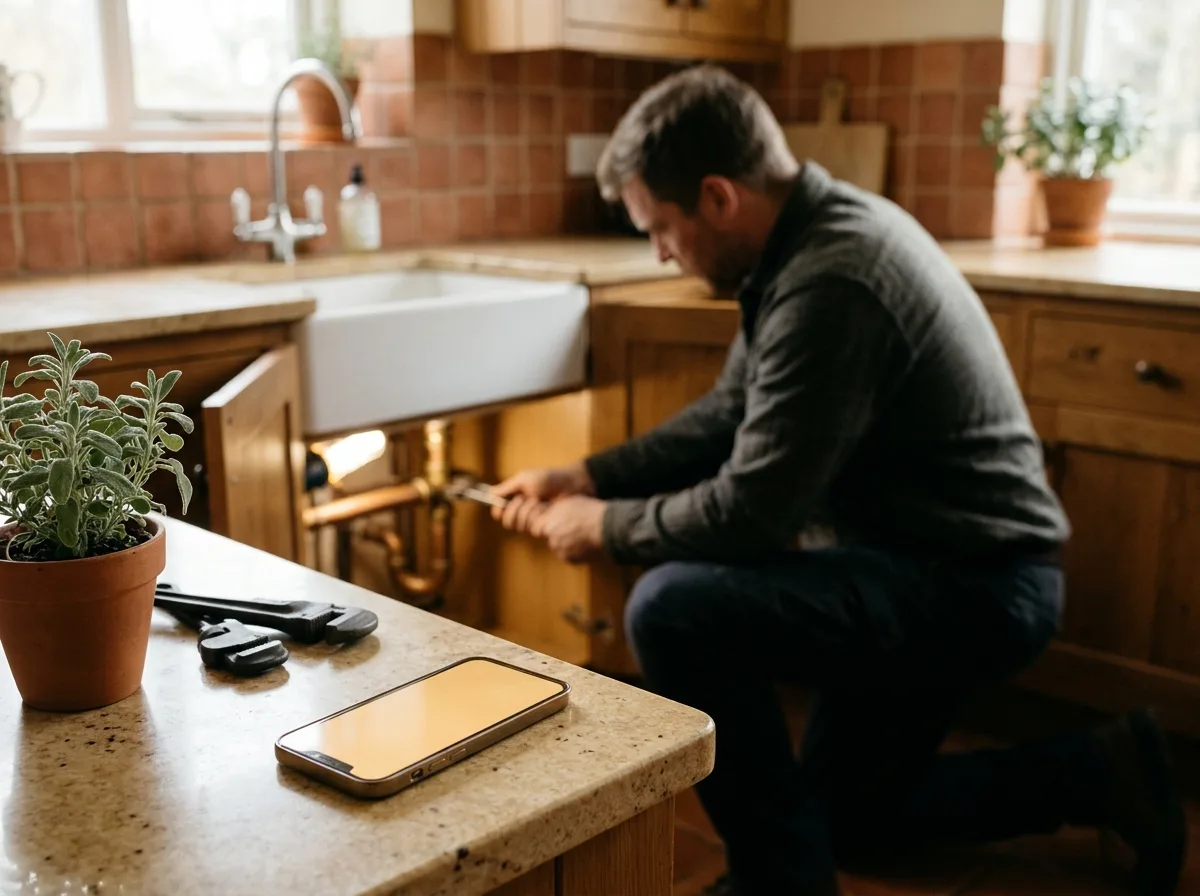
Plumbers work with their hands. You cannot answer the phone with a wrench in one hand and a pipe in the other, and you should not. The mistake is not being on the job. The mistake is having no one covering the phone while you are.
If you run a small crew, the phone often rings most when everyone is busy. Mid-morning is a classic dead zone, because everyone is out on calls and the next customer is shopping for a plumber.
The fix: Treat the phone as its own job that needs coverage, even when your team is on site. Sol answers while your crew works, so the next customer talks to someone instead of a recording.
You have no Spanish-language option
In many markets, a real share of homeowners and landlords are more comfortable in Spanish. A caller who reaches an English-only recording often hangs up and tries someone else. They rarely call back.
You never see this loss, because the call leaves no trace. It looks like a quiet week.
The fix: Offer a Spanish option on the first ring. Sol answers in English or Spanish, takes the details in the caller's language, and books the job. That is a group of high-intent callers your competitors may be ignoring.
You send callers through a phone menu
“Press 1 for service, press 2 for billing.” For an emergency caller that is an obstacle course. A person with a flooding basement wants to say what is wrong, not hunt for the right number.
Every extra step is a chance to hang up. Menus built for big companies hurt small plumbing shops, where the caller just wants a human-sounding voice to take the problem.
The fix: Let callers talk. A good AI receptionist listens to what is wrong, figures out whether it is an emergency, and routes it. No menu, no maze.
You never text back the calls you missed
Even with a good setup, some calls slip through. The mistake is treating a missed call as a finished event. A missed call with no follow-up is a lead you paid for and dropped.
A quick text that says “Sorry we missed you, what's going on and what is the best address?” can win back a caller who was still deciding. It works only if it goes out within minutes, not hours.
The fix: Automate the first follow-up. When Sol handles a call, the caller gets a confirmation text with the details. When your team misses one, you want a fast reply going out, not a note on a sticky pad.
Your phone and your schedule are not connected
A call comes in, someone writes the details on paper, and later someone types them into the schedule. By then the customer may have called two other plumbers, and the slot you could have offered is gone.
This is how double booking and forgotten callbacks happen. The phone says one thing, the calendar says another.
The fix: Connect the call to the calendar. Sol checks your live availability, books the job, and passes the address, problem, and urgency to your team in a clean summary. Your dispatcher starts with a plan instead of a pile of notes.
What should a plumbing company do first?
Start by calling your own number at 9 PM on a weekend and listening to what a customer hears. Then call it while your crew is busy. Most owners find at least two of the mistakes above in ten minutes.
Fix the biggest gap first. For most shops that is the after-hours and busy-hours coverage, because that is where the emergency jobs live.
Where does Sol fit in?
Sol is an AI receptionist that backs up your team. It answers every call on the first ring in English or Spanish, captures the problem, address, and urgency, books jobs on your calendar, and flags real emergencies to whoever is on call. It does not replace your office staff or your techs. It covers the moments they cannot get to the phone.
The result is simple: fewer jobs going to the plumber who happened to pick up, and fewer mornings spent chasing voicemails.