Dental · Listicle
9 phone mistakes costing dental practices new patients (and what each one is worth)
July 14, 2026
·
7 min read
·
Sol Reception
Your dental practice does not have a marketing problem. It has a phone problem.
Studies put the share of calls to dental offices that go unanswered during business hours at roughly 32%, with some practices running far higher, and only about 14% of new patients bother to leave a voicemail. The rest hang up and call the next office.
Here are the nine phone mistakes doing the most damage, and what each one is actually costing you.
01
Treating voicemail as a safety net
It is not one. When a new patient calls your office and gets your voicemail greeting, the overwhelming majority hang up without leaving a message and dial the next practice on the list. You never see the call, never see the name, and never learn you lost them.
The worst part is that this failure is silent, which is why so many practices believe their phone is “mostly fine.” Pull your call logs for last month and count the inbound calls with no matching appointment. That gap is the number nobody in the practice has ever looked at.
02
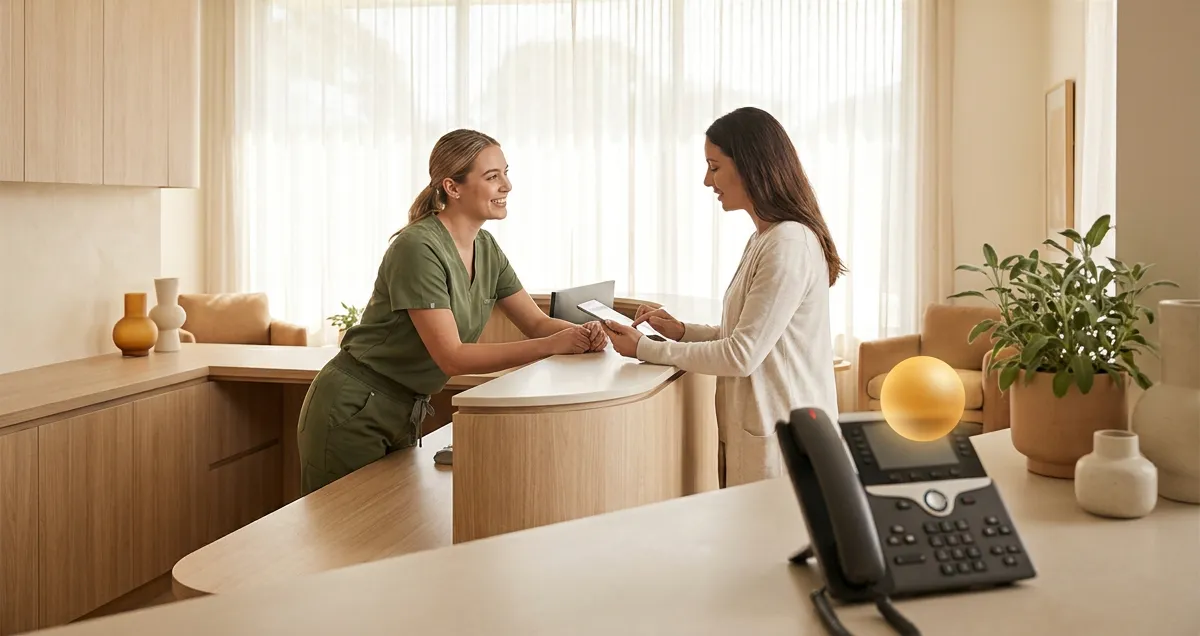
Letting the front desk answer the phone while checking a patient in
This is the single most common structural mistake in dental practices, and it is not the front desk's fault. One person cannot greet a patient standing at the counter, process a payment, verify insurance, and answer a ringing line without something losing.
Usually the ringing line loses, because the human standing in front of you is harder to ignore. That means your phone is least likely to be answered at exactly the times you are busiest, which is also when a full schedule looks most attractive to a new patient.
03
Sending after-hours calls into a dead line
People call dentists when they are not at work, which means evenings, early mornings, and weekends. They also call when something hurts, and toothaches do not respect business hours. A practice that only answers 9 to 5 is closed during a large share of the hours when its highest-intent callers are dialing.
An emergency caller at 8 pm is not going to wait until Monday. They are going to find someone who picks up, and once they have sat in that chair, they belong to that practice. One after-hours call handled well can be a patient who stays with you for a decade.
04
Answering the call but not booking the appointment
Answering is only half the job. Plenty of practices answer the phone and still lose the patient, because the call ends with “someone will call you back to schedule” instead of a confirmed time. Every handoff between answering and booking is a place where the patient cools off, gets busy, or books somewhere else. If your call does not end with a time on the calendar, treat it as a missed call with extra steps.
05
Making Spanish-speaking callers wait for someone who can help them
In a lot of US markets, a meaningful share of new-patient calls come from Spanish speakers. If your practice can only serve them when one specific team member is at the desk, then those callers are being screened out by your phone system whether you intended it or not. Practices that answer both languages on the same line, immediately and without a menu tree, capture patients that the practice down the street is quietly turning away.
06
Under-reacting to a hang-up
Missed calls get logged and forgotten. But a new-patient call is not one lost cleaning appointment, it is a lost patient relationship.
Industry estimates put the immediate first-year value of a new dental patient in the high hundreds of dollars and the lifetime value in the thousands. At even a modest miss rate, a practice missing a handful of new-patient calls a week is looking at six figures a year in lifetime value walking out the door.
That is not a phone annoyance. That is your growth plan.
07
Paying for marketing that ends in an unanswered ring
You bought the search ads. You paid for the SEO. You funded the new-patient promotion. All of that spend exists for one purpose: to make the phone ring. If a third of those rings go unanswered, then roughly a third of your marketing budget is buying nothing at all.
Fixing the phone is the cheapest ROI improvement available to most practices, because it multiplies the money you are already spending instead of asking you to spend more.
08
Making a new patient navigate a phone tree
Press one for scheduling, press two for billing, press three to hear the menu again. Existing patients tolerate this because they already have a relationship with you. A first-time caller does not. They are comparison shopping, they have your competitor's number open in another tab, and a menu tree is a very easy reason to hang up. Every layer you put between a new patient and a human answer is a layer where they leave.
09
Trying to solve it by hiring your way out
The instinct is to add another front-desk person. Sometimes that is right. Often it is expensive and does not fix the shape of the problem, because call volume is spiky. Your calls do not arrive evenly, they arrive in clusters around opening, lunch, and closing, and a second person is idle when it is quiet and still overwhelmed when it is not. Meanwhile the after-hours calls remain unanswered no matter how many people you hire for daytime shifts.
This is where Sol fits. Sol is a bilingual AI receptionist that answers every call in English or Spanish, 24/7, and books the appointment straight onto your calendar. It picks up when your front desk is with a patient, when everyone is on another line, and at 9 pm on a Sunday when someone has a cracked molar and is choosing between you and the practice down the road. Sol backs up your team, it does not replace them. Your front desk keeps doing what a person does best: taking care of the patient standing in front of them, without a ringing phone pulling them away.
The fix is simpler than the problem
You do not need more marketing. You need every call answered and every appointment booked. Fix the phone and the schedule fills with the patients your marketing already paid for.
FAQ
Common questions
What percentage of calls to dental practices go unanswered?
Research puts the figure at roughly 32% of calls during business hours, with some practices running considerably higher. The number climbs during peak times like opening, lunch, and closing, which is when the front desk is also handling check-ins and payments.
Do people leave a voicemail when a dental office does not answer?
Almost never. Only around 14% of new patients leave a voicemail. The rest hang up and call the next practice, which is why missed-call losses are so easy to underestimate: the practice has no record that the call ever happened.
What is a missed new-patient call worth to a dental practice?
Industry estimates put a new dental patient's first-year value in the high hundreds of dollars and lifetime value in the thousands. A practice missing even a few new-patient calls a week can be losing six figures a year in lifetime patient value.
Can an AI receptionist book dental appointments directly?
Yes. Sol answers the call, asks whether the caller is a new or existing patient, handles basic questions, and books the appointment onto the practice's calendar during the same call. The office gets a written summary of every call, so nothing needs to be reconstructed later.
Will an AI receptionist replace my front desk staff?
No. Sol backs up the team rather than replacing it. It covers the calls that come in while the front desk is with a patient, when everyone is already on the line, and after hours, so staff can focus on the person in front of them.
Do I need a bilingual phone line for my dental practice?
In many US markets, yes. If Spanish-speaking callers can only be served when one specific team member is at the desk, your phone system is filtering out patients you already paid to attract. Sol handles English and Spanish on the same number and switches based on how the caller speaks.