
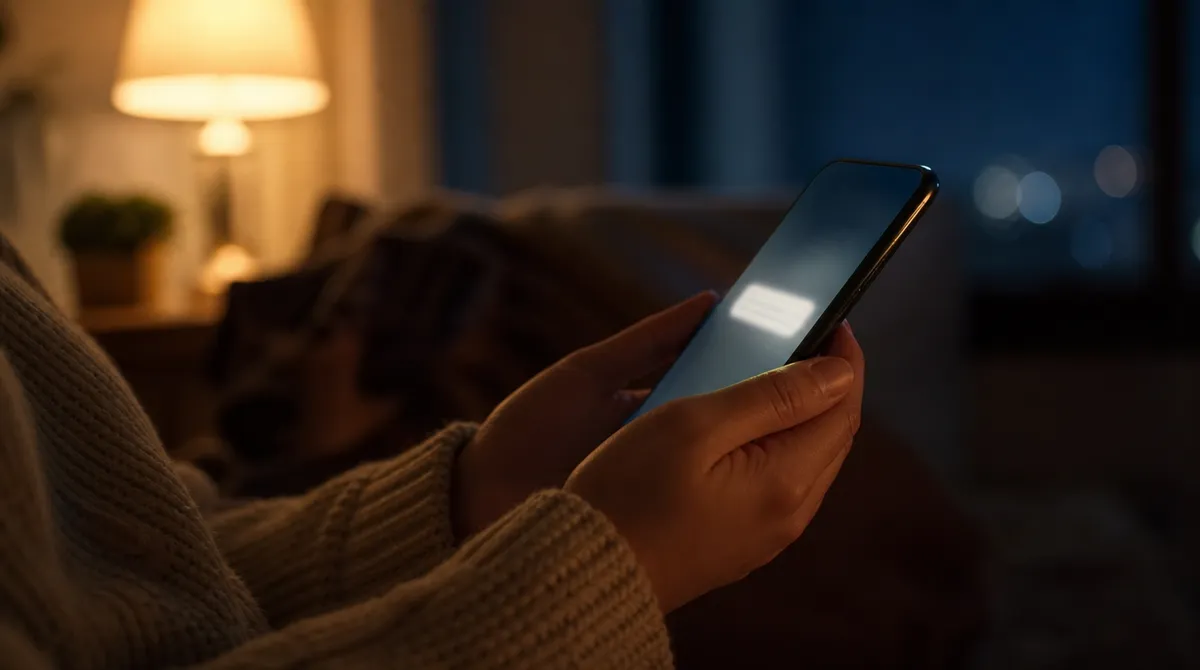
A patient wakes up at 10 p.m. with a cracked tooth and a throbbing jaw. They call your office. They get your voicemail greeting and the after-hours message. What happens next decides whether that person becomes your patient or someone else's.
Here is the direct answer. When a dental office sends after-hours emergency calls to voicemail, most of those callers hang up and dial the next practice on Google. Industry estimates commonly put the share of callers who reach a voicemail and never leave a message at around 80%. A patient in real pain is the least patient caller you will ever have, so the office that answers the phone, calms them down, and gets them on the schedule is the office that keeps them. Not just for tonight's emergency, but for the crown, the follow-up, and years of routine care after that.
That is the problem this article walks through, and how a practice can fix it without asking a human to sit by the phone all night.
What actually happens when a patient calls a dentist after hours
Most practices handle after-hours calls one of three ways, and two of them leak patients.
The first way is plain voicemail. The patient hears your hours, gets told to call back in the morning or go to the ER, and hangs up. For a scared person with a swollen face, that is the end of the relationship. They are already searching “emergency dentist near me open now.”
The second way is a traditional answering service. A live person picks up, takes a message, and promises someone will call back. This is better than voicemail, but the caller still does not have an appointment, does not know if their problem is urgent, and is often charged-per-call for a service that mostly writes down a name and number. Many of those callers keep dialing while they wait for a callback that may come at 8 a.m.
The third way is the one that keeps the patient. The call gets answered right away, the caller gets calm triage to sort a true emergency from something that can wait, they get comfort guidance for the pain, and they get booked into the first available slot or routed to the on-call dentist if it cannot wait. The patient hangs up feeling handled instead of dismissed.
The gap between the second and third approach is where the revenue is. An answering service takes a message. What a dental practice needs after hours is something that finishes the job: answers, triages, and books.
Why do dental patients not just leave a voicemail and wait?
Because pain does not wait, and neither do they. A dental emergency is one of the few reasons a person will call a business at midnight, and the emotional urgency is high. They want relief and reassurance now, not a callback tomorrow.
Commonly cited industry estimates put the share of callers who reach voicemail and never leave a message at around 80%, and a patient in pain is even less likely to sit on hold with your recording.
They came to you first, which means they were ready to be your patient. When your phone does not answer, you do not just lose the emergency visit. You hand a warm, high-intent patient to a competitor who happened to pick up.
What counts as a real dental emergency, and how do you triage it after hours?
Not every after-hours call is a true emergency, and part of handling these calls well is telling the difference without a dentist on the line for every ring.
True emergencies usually include a knocked-out tooth, uncontrolled bleeding, significant facial swelling, a possible infection or abscess, or trauma to the mouth. These need fast attention, often a same-night or next-morning slot, and sometimes the on-call dentist. Cases that can safely wait include a lost filling with no pain, mild sensitivity, a chipped tooth that does not hurt, or a broken retainer. These get booked for the next business day.
Good after-hours triage does three things. It asks the right screening questions to sort urgent from routine, it gives the caller approved comfort guidance while they wait, and it either books the appointment or escalates the genuine emergency to the on-call dentist. Done right, your dentist only gets woken up for the calls that truly need them, and every other caller still ends up on the schedule instead of on a competitor's.
What does one missed after-hours call actually cost?
More than the single visit, because a dental patient is rarely a one-time transaction.
Walk the math. Say an after-hours emergency turns into a same-week visit. That visit alone might be a few hundred dollars, but the emergency is usually the front door. The cracked tooth becomes a crown. The abscess becomes a root canal and a crown. Then that person becomes a recurring patient with cleanings twice a year, plus a family who books with the practice they trust. Industry estimates commonly put the lifetime value of a single active dental patient in the thousands of dollars.
Now multiply. If your office misses even two or three after-hours or overflow emergency calls a week and half of those callers book elsewhere, you are not losing a couple of appointments. You are losing several new-patient relationships a month, each worth thousands over time, plus every referral they would have sent you.
The lost visit shows up nowhere on your reports, which is exactly why it keeps happening.
Can an AI receptionist handle after-hours dental calls safely?
Yes, and this is where a tool like Sol earns its place. An AI receptionist answers every call on the first ring, at any hour, without your team staffing an overnight shift. It runs your triage script, sorts the true emergencies from the calls that can wait, offers approved comfort guidance, books routine emergencies straight into your scheduling software, and escalates a genuine emergency to your on-call dentist by your rules.
A few things matter when you evaluate one for a dental office. It should follow your protocols exactly, not improvise medical advice. It should handle patient information responsibly and support HIPAA-conscious workflows, since these calls involve protected health information. It should book into the practice management or scheduling system you already use, so the appointment is real and on the calendar, not a note someone re-keys in the morning. And it should hand off cleanly to a human whenever the situation calls for it.
Sol does the catching and the booking so your front desk walks in to a schedule that is already filling, instead of a voicemail box full of hang-ups. Sol backs up your team. It never replaces your front desk or your dentist. It covers the nights, the weekends, and the moments during the day when every line is ringing and the two people at your desk cannot answer all of them at once.
Does an AI receptionist answer Spanish-speaking patients too?
Yes. Sol answers in both English and Spanish on the same line, at any hour and any call volume, without you hiring separate bilingual coverage. In a lot of markets, a Spanish-speaking patient with a dental emergency at night has very few offices that can help them in their language. Being the practice that answers in Spanish, calmly and immediately, captures patients who would otherwise hang up and keep dialing.
Handling the common objections
“We already use an answering service.” Most answering services take a message and charge you to do it. They do not run your triage, they do not book the appointment, and they do not scale when several calls hit at once. The patient still has no appointment when they hang up, so many of them keep calling other offices. Sol completes the booking and routes the true emergencies, so the call becomes a patient instead of a message you chase at 8 a.m.
“I don't want a robot giving medical advice to patients in pain.” Fair, and it should not. A good AI receptionist runs the exact triage script and comfort guidance you approve, and escalates anything outside those bounds to your on-call dentist. It is answering, screening, and scheduling, not diagnosing.
“I don't want to replace my front desk.” You are not. Your front desk cannot answer the phone at 11 p.m. or field five lines at once during a Monday rush, and no one should ask them to. Sol catches the after-hours calls and the daytime overflow so your team can focus on the patients in the chair and the ones already booked.
The bottom line
A dental emergency is the moment a patient decides who their dentist is. They are in pain, they are motivated, and they are calling you first. If your phone sends them to voicemail, you have paid nothing to lose them and you will never see the loss on a report. If your phone answers, triages, and books, you keep the emergency visit, the treatment that follows, and years of care after that.
An AI receptionist like Sol answers every after-hours and overflow call, in English and Spanish, runs your triage, books the appointment, and escalates the true emergencies to your on-call dentist. Your team stops losing patients overnight and walks in to a fuller schedule.