
A new patient calling your chiropractic office has already done the hard part. They searched, they compared a few options, they found you, and they picked up the phone ready to book. Then they hung up. Most chiropractic offices never find out why, because the call just disappears, no record, no follow-up, no second chance, and no line item on any report that says “lost patient.”
That is what makes phone breakdowns so expensive compared to almost any other marketing problem a practice has. The lead was not cold. It was not unqualified. It was a person in pain, ready to hand over their information and their business, who simply could not get through the front door of a phone call.
Short answer: New patients most often hang up before booking with a chiropractic office because they are put on hold too long, the call rolls to voicemail during patient hours, or nobody calls back after hours. Every one of these breakdown points is fixable, and closing them is usually worth more to a practice than any new marketing spend, since the caller was already ready to book before the call ever started.
Here are the 7 most common places that happens, what it costs the practice, and what closes each gap.
The caller gets put on hold longer than 30 to 45 seconds
Industry observations on clinic phone behavior consistently find that callers who are not yet patients hang up if they are asked to hold much past 30 to 45 seconds. A returning patient will wait, because they already trust the practice and know someone will be right with them. A first-time caller has no relationship yet, so a long hold reads as “nobody here has room for me,” and they move to the next chiropractor on their list, often before the front desk even finishes with the person in the lobby.
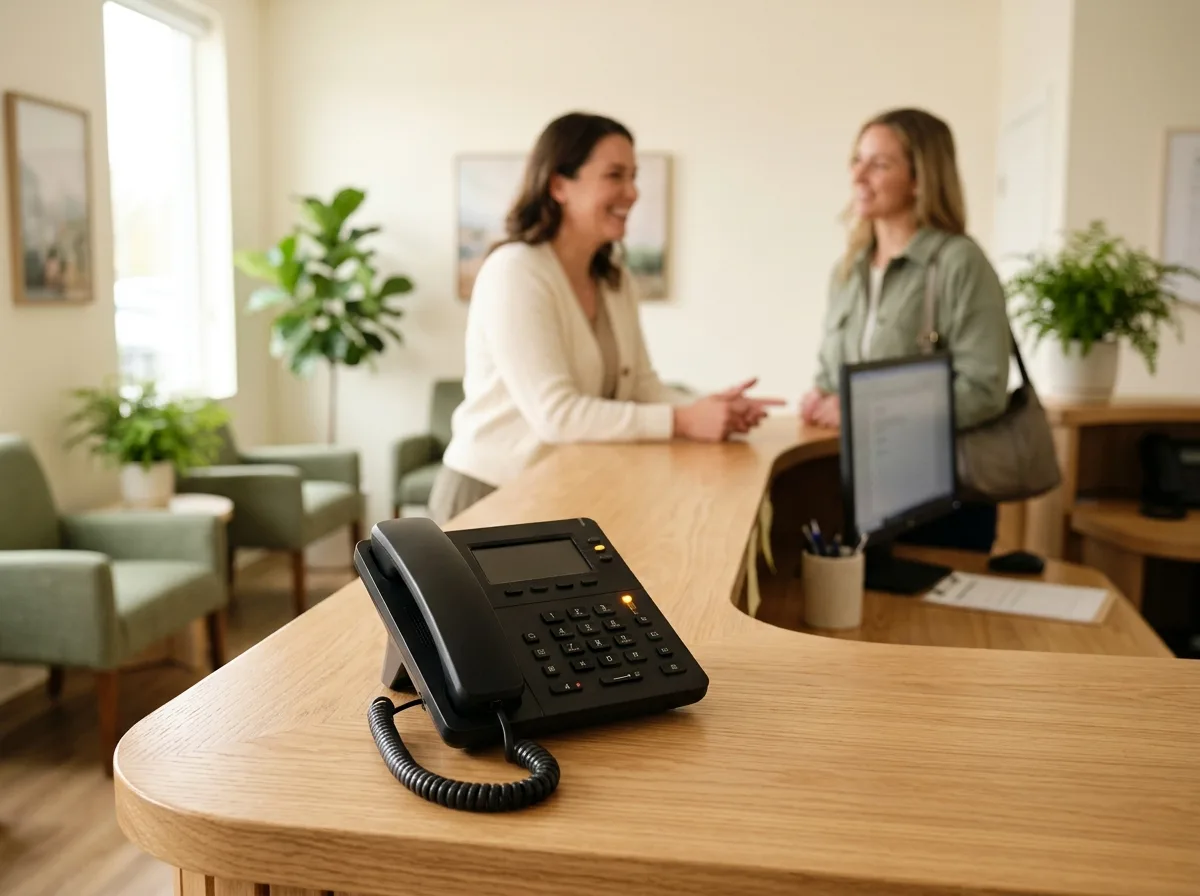
The call rings through while the front desk is checking in a patient
Front desk staff are almost always doing two jobs at once: greeting the patient standing in front of them, and answering the phone. When a new patient calls during a busy check-in window, the front desk either lets it ring out or rushes through the call to get back to the person in front of them. A rushed first impression rarely converts into a booked visit, and a practice with a steady stream of walk-ins and check-ins can have this happen several times a day without anyone tracking it.
The call comes in after hours and nobody follows up the same day
A large share of new patient calls happen in the evening, when someone finally has a quiet moment to deal with the back pain they have been ignoring all week. If that call goes to a generic voicemail and the callback comes a day or two later, the urgency (and often the patient) is already gone. They booked with whoever picked up first, and the practice never even shows up as a missed opportunity on any report, since the call was never really logged as a lead to begin with.
Nobody at the practice can help a Spanish-speaking caller in the moment
When a Spanish-speaking caller reaches a front desk that cannot serve them right away, the usual outcome is an apology and a promise to call back with an interpreter, which rarely happens fast enough to matter. That caller has other chiropractic options within a five-minute drive, and they do not wait around for a callback that may or may not come. In markets with a large Spanish-speaking population, this single gap can quietly cost a practice a meaningful share of its potential new patients every month.
The front desk cannot confidently answer an insurance question
New patients frequently lead with a question about whether their insurance is accepted or what a first visit costs. If the answer is a hesitant “let me check and call you back,” a lot of callers hear that hesitation as a no and hang up rather than wait for an answer that should have been immediate. Cost and coverage are usually the deciding factor for a first-time caller, more than the practice's reviews or its location.
Booking requires a second phone call
Some practices can answer the phone but cannot actually get the caller onto the calendar in that same conversation, whether because the scheduling system is separate or the front desk needs to check with someone else first. Every extra step between “I want to book” and “you are on the calendar” is another chance for the caller to get distracted, change their mind, or simply forget to call back once they hang up to “check their schedule.”
The voicemail they left never gets a callback
This is the most common breakdown, and the most avoidable one. A message gets left, it sits in a queue with a dozen others, and by the time someone gets to it, the new patient has already booked somewhere else. A voicemail is not a lead in the pipeline. It is a lead the practice is hoping to get lucky on, and hope is not a scheduling strategy. Practices that track this closely often find that voicemails from unfamiliar numbers get the slowest callback of any call type, precisely because nobody knows yet whether it is worth the time, which is exactly backwards from how a new patient should be treated.
Where this leaves most chiropractic offices
Nearly all of these breakdown points share the same root cause: a human front desk that is excellent at caring for the patients already in the building, and stretched too thin to also win every new patient on the phone. That is not a staffing failure. It is simple math. One person cannot check in a patient, answer a ringing phone, confidently quote insurance coverage, and follow up on last night's voicemail, all at the exact same moment.
A practice that answers 60 new patient calls a month and loses even 20 percent of them to one of the seven reasons above is losing 12 patients a month before a single one ever sets foot in the office. Multiply that across a full year and it is often the single largest, least visible leak in a chiropractic practice's growth.
Sol backs up the front desk rather than replacing it. As a 24/7 bilingual AI receptionist, it answers every call on the first ring in English or Spanish, books directly onto the practice's calendar during that same conversation, and never puts a new patient on hold or lets a voicemail sit unanswered overnight. The front desk still runs the front desk, greets patients, and handles the in-person experience. Sol just makes sure no new patient hangs up because everyone else was already busy caring for someone else.